Julian Davis Reid: Honoring the Superheroes, Struggles, and Spirit of Everyday Life and People
Julian Davis Reid
While elevating his physique and accent to become T’Challa, the superhero lead in the 2018 film Black Panther, Chadwick Boseman maintained contact with two children enduring cancer. Boseman had heard from the children’s parents how they were determined to see the film upon its release.
This experience, Boseman said, humbled him.
“You’re like, ‘This can’t mean that much to them,’” he said, during a SIRIUS/XM Town Hall meeting promoting the film. “But seeing how the world has taken this (film) on, seeing how the movement has taken on a life of its own, I realized that they anticipated something great.”
Boseman then compared the children’s eagerness to his own childhood, when he awaited gifts for his birthday and Christmas.
“I did live life waiting for those moments, and so (that) put me back in the mind of being a kid,” he continued, “just to experience those two little boys’ anticipation of this movie. And when I found out that they…”
He stopped, overwhelmed by the boys’ eventual fate. While his colleagues offered vocal and spiritual support, he found enough air to say, “It means a lot.”
Two years later, Boseman would, himself, succumb to cancer at age 43.
While watching Michael Burkes, his lifelong friend for 33 years, battle debilitating nerve damage, pianist and composer Julian Davis Reid realized something substantial.
“As Michael was going down the last stretch of life, I saw him struggle harder to get up daily to watch Black Panther and Iron Man,” Reid recalled, during a recent conversation. “When I saw him doing that time and time again – even though we were watching these heroes on the screen – it occurred to me that Michael Burkes was a superhero. So I wrote ‘Nerve to be Super’ around my call to be a friend to him and how he had been a friend to me.”
Reid composed “Nerve to be Super” in the summer of 2024, a few months before Burkes died. He played it for his ailing friend in the car, en route to a burger joint, after they had seen a film, but, “…there wasn’t a lot of back and forth, so I had to accept it for what it was,” he said.
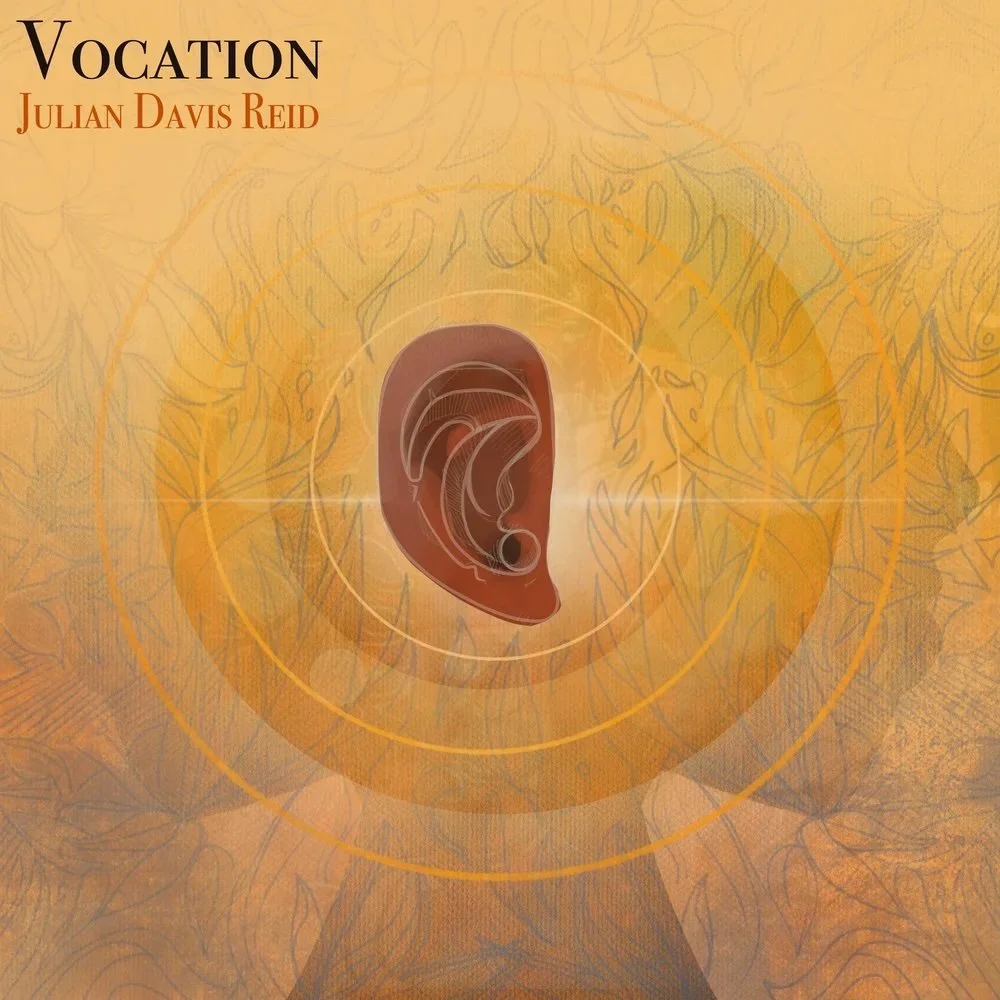
“Nerve to be Super” is included on Vocation, Reid’s first recording as a leader. (It also features alto saxophonist Lenard Simpson, bassist Micah Collier, and drummer James Russell Sims.) This song, he added, is also intended for anyone who has offered comfort to someone fighting for life, and for those whose bouts with physical and/or emotional pain leave them struggling to get up and endure another day.
“What does it mean to call them ‘super’?” Reid asked. “They’re not celebrated. They don’t get awards, but what does it mean to commend them as laudable?”
From swing to groove to funk, “Nerve to be Super,” Reid added, maintains a momentum that, like Burkes, represents something wholly heroic. Reid also credited Simpson for enriching the song with his spiritual interpretations about heroism. This song’s progressions, he said, conclude with this call:
“In this time, when it can be so tempting to be cowardly, may we all strive to be super.”
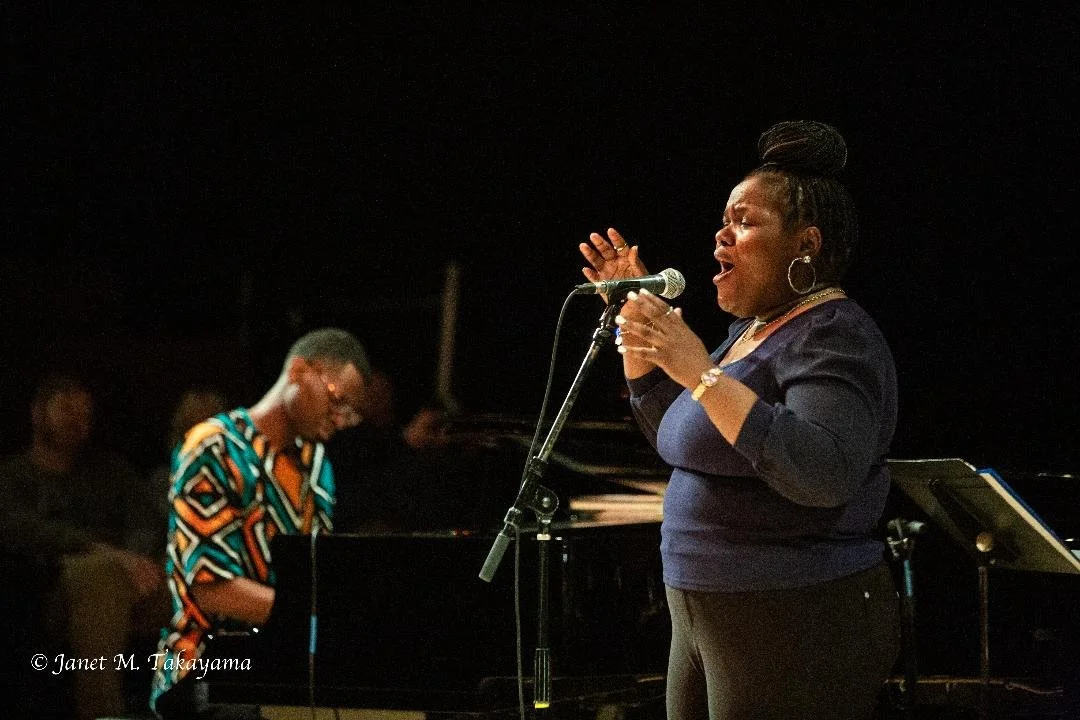
Vocation also features “Moan (For Hearts of Flesh),” a four-chapter spiritual exploration where Tramaine Parker is added to the ensemble and begins a call to worship through wordless vocals. When discussing this song and its video, which can be seen at juliandavisreid.com, the pianist and Yale graduate stated that “We Moan in Faith,” the first chapter, is an invitation for listeners to realize that all moans produce faith.
“The moans we have in our lives are moans that God hears,” Reid said. “These moans are ways to reach out and call on the transcendent, call on the divine, to hear us, and moans can also come from such guttural places.”
For “We Moan as One,” the second chapter, Parker is joined by a second vocalist, Narykcin, and the Calvin University Gospel Choir. These multiple voices, Reid explained, represent moans from Black people, Palestinians, antiquity, and from slave ships to the 2014 riots in Ferguson, Missouri, caused by a fatal, police-involved shooting. This location, he said, inspired this section, adding that these moans all share multiple realities.
“They are all connected to the moans of rivers being polluted and the moans of trees being cut down,” Reid said. “They are connected to all the insects being affected, everybody being affected by climate change and ecological destruction. So our moans come together.”
For “We Moan to Resist,” the third chapter, dancer Jarais Musgrove is featured. “There are forms of resistance to Black dance,” Reid said. “Dancing speaks to the fact that Black folks have always found that our moans resist the dehumanization that says we don’t feel pain like others do. Our moans keep us tethered to our humanity.”
Reid then referenced Joy Unspeakable, a book by the late Dr. Barbara Holmes, where moans from captured Africans on slave ships helped them keep their humanity.
“The only sound that would carry Africans over the bitter waters was the moan. Moans flowed through each wracked body and drew each soul toward the center of contemplation,” Dr. Holmes wrote. “On the slave ships, the moan became the language of stolen strangers, the sound of unspeakable fears, the precursor to joy yet unknown.”
“We Moan for Freedom,” the final chapter, begins with Reid exploring Osaka Garden, located at the Obama Presidential Center. This journey, he explained, represents his wish that, “…one day, we will be free of moans, that God will wipe every tear from our eyes, so our moans will not be moans forever.”
When discussing her experience performing “Moan,” Parker noted how it always stirs her spirits.
“When I’m singing it live, there are always little differences because it’s based on whatever the energy is, and it’s always powerful,” said Parker, who recently sang with Reid in “Pianist and a Partner, (Perhaps)” at the Elastic Arts Foundation. “I’m very grateful to go to that place and hope that people feel that energy. That song has a lot of depth. And each time Julian plays it, he also goes to a different place.
“And when I’m singing it, I’m thinking about ancestry, going back, going into a deeper place to really emote,” she continued. “The song makes you think about transforming, or transcending, from a place where one is feeling grief, or going to a space where you’re overcoming something.”
Loss, leading to recognition and revival, created “Mercy We Need,” the first song written by Reid and Parker. Composed in May 2024, it honors Parker’s mother, who had passed away three months earlier.
“The beginning of the line,” Parker said, begins: ‘O bless my soul when I am weary/O give me peace in the midst of the storm/O, Lord, don’t leave me all alone/Your mercy, I need.”
The Duke, The Chosen…Color of…
Reid, who earned his Master’s of Divinity degree in 2019, cited Duke Ellington’s Sacred Concerts as a major influence on his music. He once co-presented a detailed study, titled “Duke Does Exegesis: Modes of Interpreting Scripture in Ellington’s Three Sacred Concerts,” at a conference hosted by the American Academy of Religion. His other muses include Mary Lou Williams, Robert Glasper, and Lenard Simpson. “He really inspires me with just how freely expressive he is about his spirituality, about his faith in Jesus, in his music,” Reid said about his bandmate.
Reid also reminisced about his time with the Chosen Few, a now-defunct quartet led by saxophonist Isaiah Collier. When discussing “Nerve to be Super,” he traced its spiritual origins to “The Almighty,” a song in the ensemble’s arsenal.
“Every time we played that song…Man!” Reid exclaimed. “It started with this one note played over and over, and that got to me. That song speaks to the depth of what it means to worship and what it means to serve. It comes from the inspiration around my spirituality showing up in my music.”
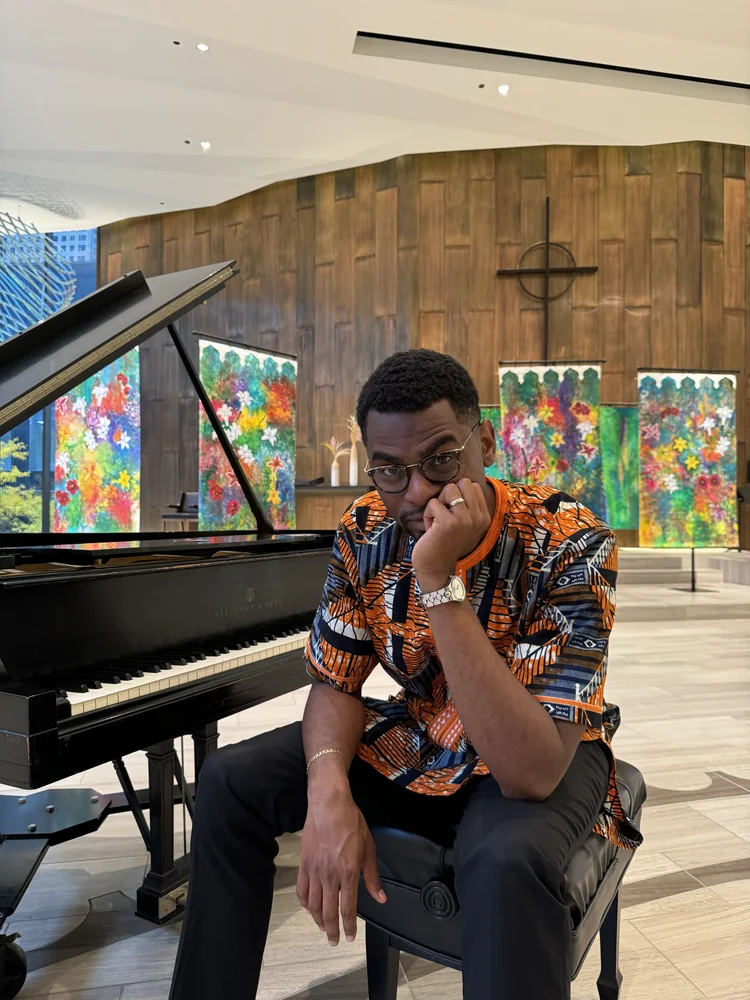
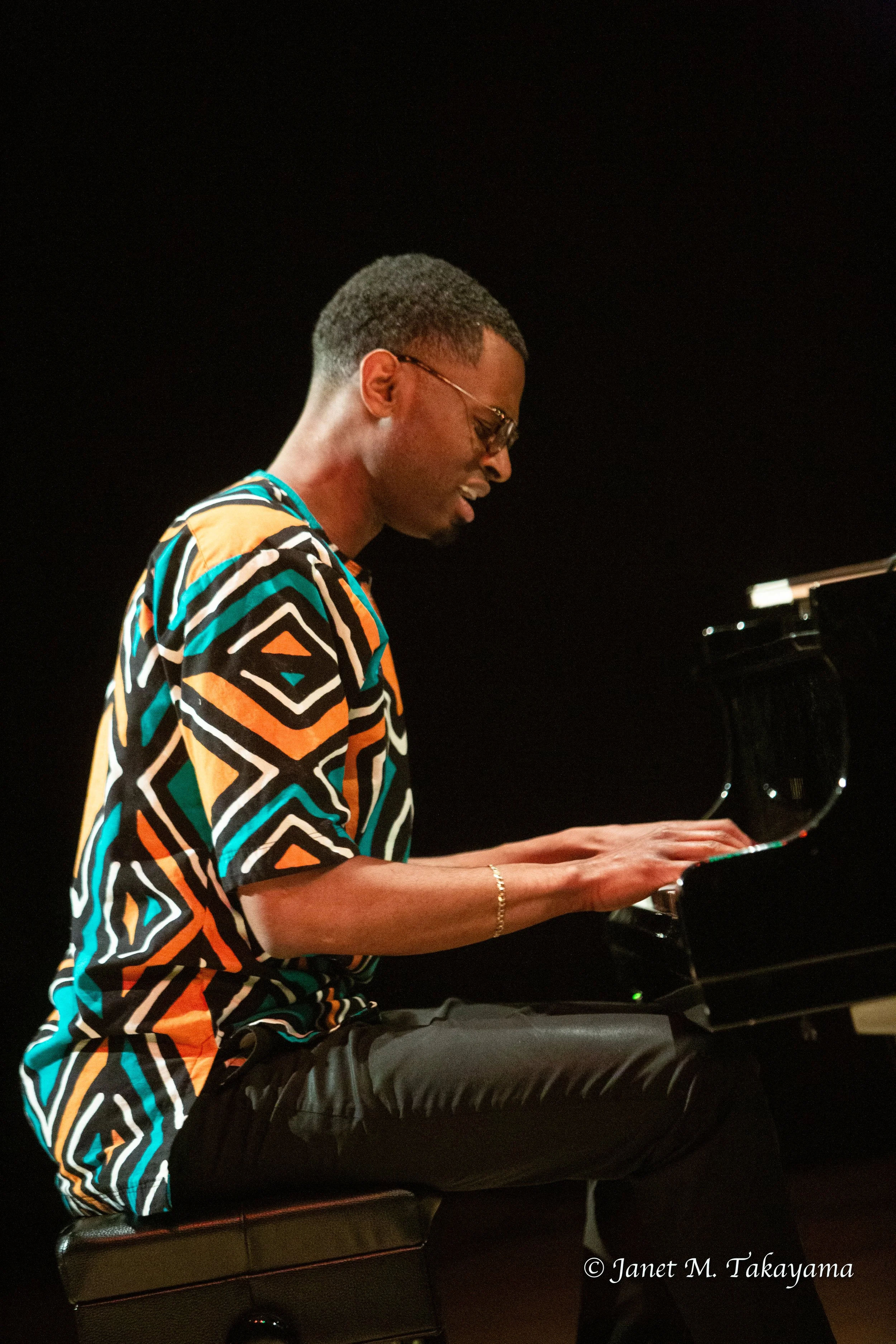
When watching Reid’s videos or experiencing him and his ensemble live, one will notice a dashiki, ripe with orange, that he wears. Orange, he explained, is the international color of hope, something he wants his music to instill.
“It’s a reminder of where I ultimately come from, the continent, and also where all of us come from,” he said. “Any hope we have as a species has to contend with how we treat the continent, regardless of where we are, and how we continue to treat it.”
Last Call…To…
Folks attending Reid’s February 10th gig at the Jazz Showcase, where he performed with Parker, Sims, and bassist Ethan Philion, were invited to participate through their voices on “Take Care Now.” This song, he explained, “gives the audience a chance, at the end of a long, contemplative, emotionally dynamic journey of a show, the chance to participate with us and leave out with a blessing.”
It goes like this:
“Take care now/I still got miles to go/Take care now/May goodness follow you home/Take care now/Let music walk with you/Take care now…O! Take care now.”