Gassuhs…Coles…and Love! Lady Sunshine Illuminates Bronzeville’s Jazz History
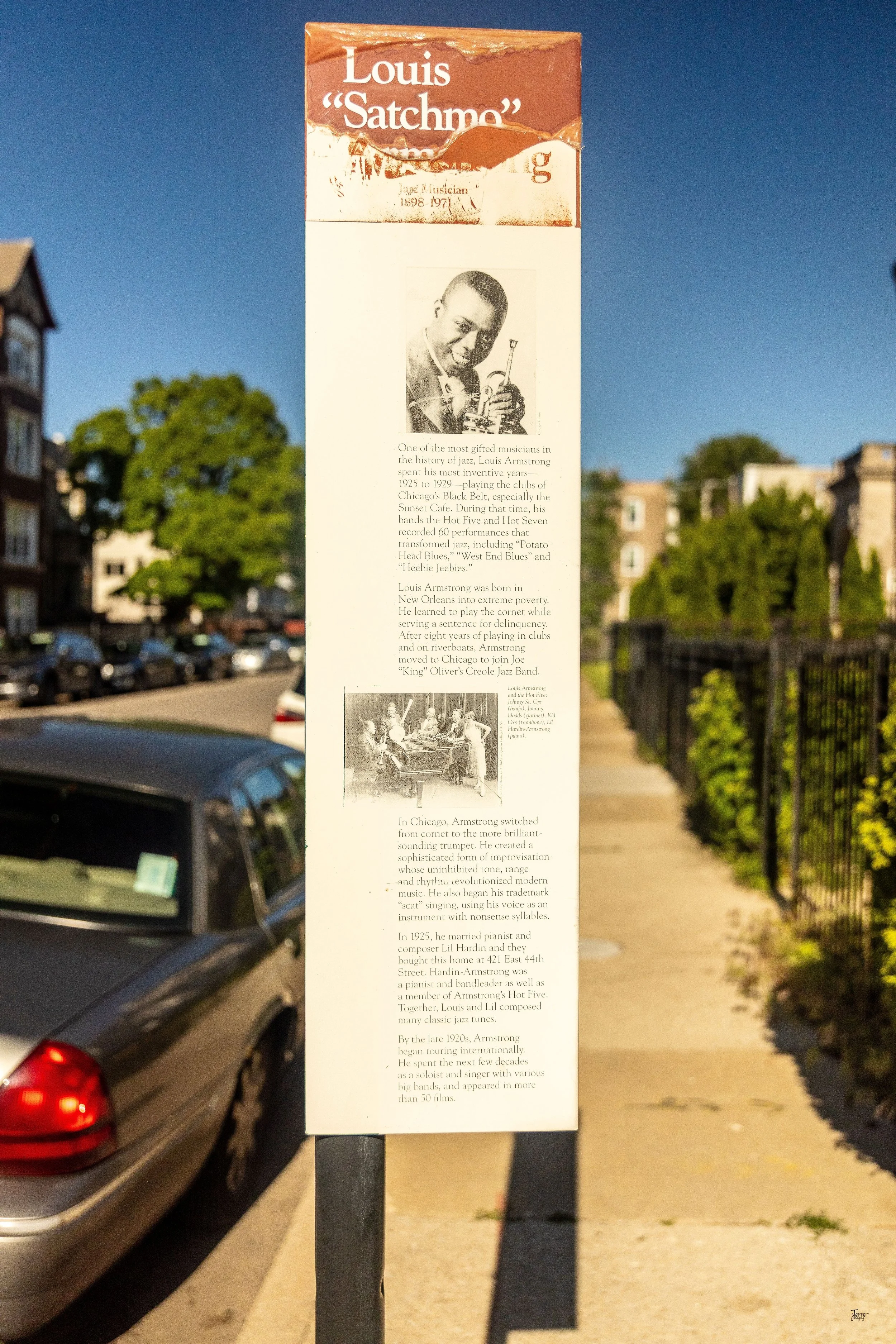
421 East 44th Street
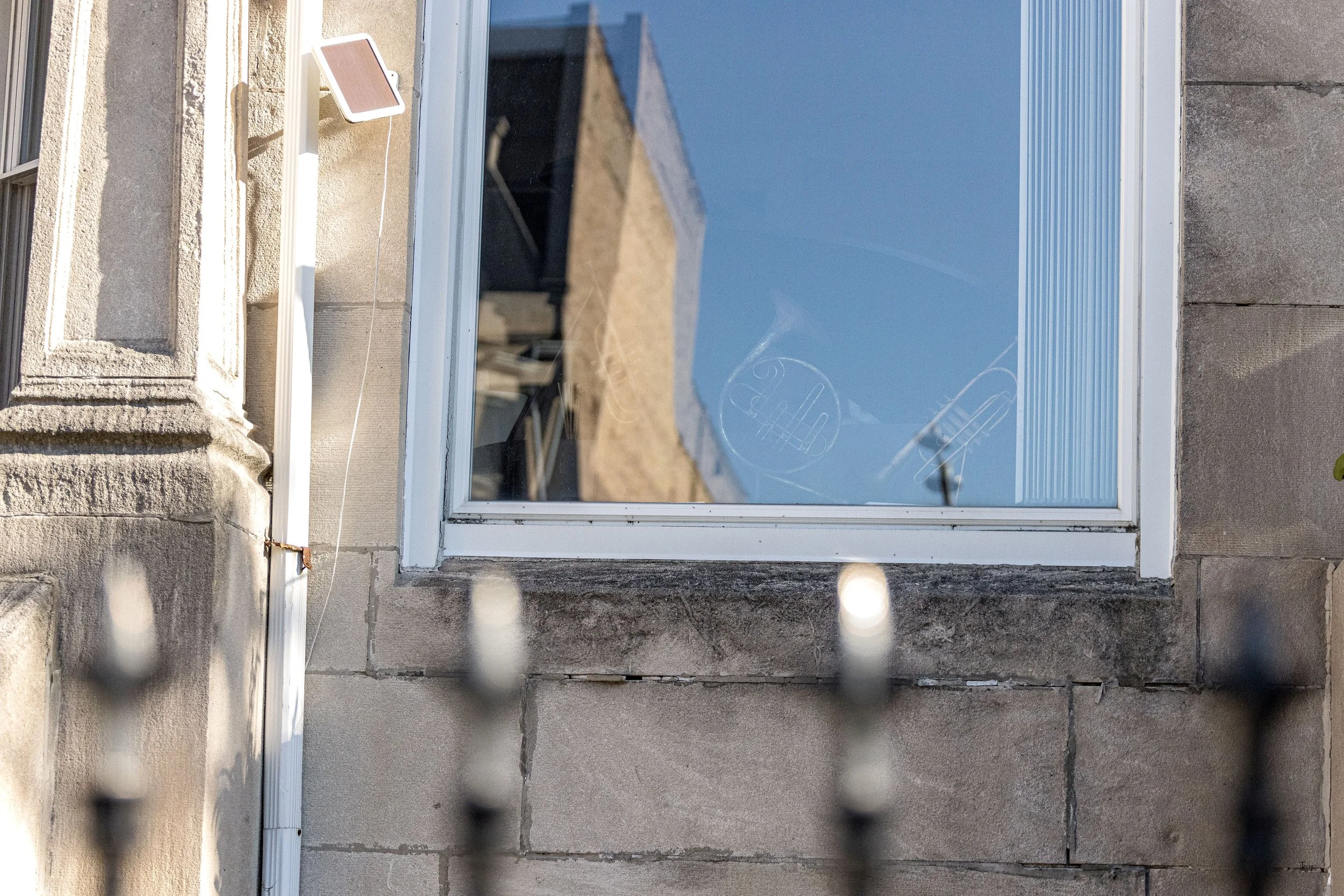
Quietly, restfully, the object -- angled on its own terms in the window at 421 East 44th Street -- could be seen from street level next to a French horn and its identical twin to the left. Its bell pointed up, directly above its trio of valves.
This object’s mouthpiece, and its interactions with the owner, were so intense that it repeatedly cracked his lips. Then, when callouses formed, he would excommunicate them with a razor blade. This object, a trumpet, belonged to Louis Armstrong (1901-1971). The physical punishment that he endured through his love-love relationship with this trumpet became known as “Satchmo’s Syndrome.” (“Satchmo,” formerly “Satchel Mouth” in his childhood, became Armstrong’s nickname. This term referred to his large mouth.)
For nearly 50 years, Armstrong’s trumpeting and singing would entertain admirers in more than 60 countries and recordings that, for sure, numbered more than a grand. “You can’t play anything on a horn that Louis hasn’t already played,” Miles Davis once said. And here is what Armstrong himself once boasted about his existence through the trumpet. “When I pick up that horn, that’s all. The world’s behind me, and I don’t feel no different about that horn now than I did when I was playing in New Orleans. That’s my living and my life. I love them notes. That’s why I try to make them right.”
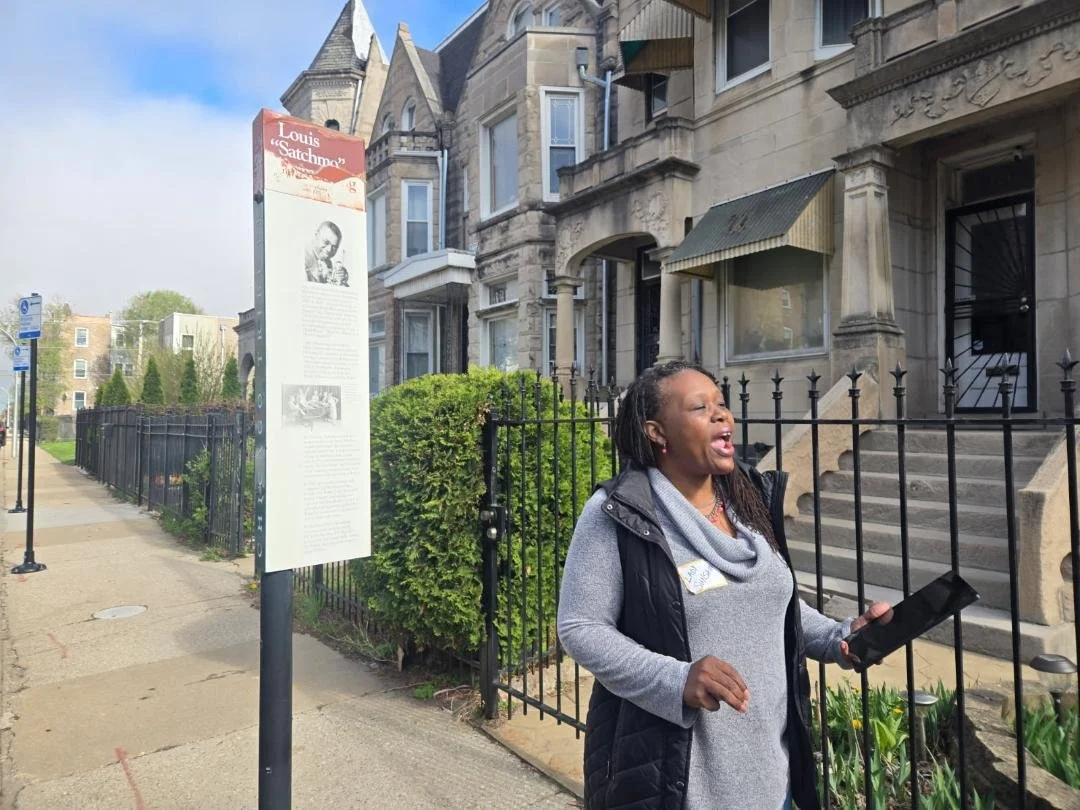
Armstrong’s life, along with his everlasting imprint on music and society, were explored through “At the Forum: The Bronzeville Roots of Chicago Jazz,” a walking tour sponsored by the Chicago Jazz Alliance. Held April 25th and narrated by Shani Smith, founder of the Black Cornerstones Project, the tour began at the Forum, 318 East 43rd Street. It also included a detailed discussion about Nat “King” Cole and a visit to the mural created in his honor. This tour, and the live music that happened at the Forum, were precursors to the 15th Annual International Jazz Day, celebrated worldwide, with performances held in Chicago on April 30th.
As Smith – also known as “Lady Sunshine” – and approximately two dozen attendees stopped at the house that displayed Armstrong’s trumpet, she encouraged everyone to, “Draw your eyes to the horn in the window. It is a signal, an invitation, a chance that there’s love in jazz, not just in feelings but in actions. It is saying: ‘I see you! Come play!’ ”
Smith, who believes in full-contact hugs when meeting folks, also noted the landmark on the sidewalk celebrating the man who, according to Duke Ellington, “…was born poor, died rich, and never hurt anyone on the way.”
“Louis used to tell everyone he was born on the 4th of July,” Smith said. “Although he was a fireworks baby, the truth is he was born in August of 1901. He just loved the idea of being a symbol of American joy so much that he moved his own birthday.”
Armstrong’s exuberance, always evident through his playing and singing, would also radiate through a full-extension smile. “He wasn’t just smiling; he was surviving,” Smith said, adding that numerous Black people found such ever-present joy offensive.
“They called him an ‘Uncle Tom,’ a sellout,” she said, referring to the title character in Uncle Tom’s Cabin, a novel published in 1852 by Harriet BeecherStowe. Such critics included Miles, then-NAACP attorney Thurgood Marshall, and Dizzy Gillespie. (Armstrong and Diz would eventually become friends.) “But they didn’t see the man behind the curtain,” Smith continued. “They didn’t see the man who stood up to the president (Dwight D. Eisenhower) over civil rights.”
(The resistance Smith referred to happened in 1957. In his desire to prevent nine Black children from integrating Little Rock (AR.) Central High School, Governor Orval Faubus deployed the state’s National Guard.)
“ ‘The way they’re treating my people in the south,’ ” Armstrong vented to reporter Larry Lubenow, ‘ “the government can go to hell.’ ” Just days later, President Dwight Eisenhower sent the 101st Airborne Division to Little Rock to make sure the students made it safely into school. Many believed Armstrong’s words led him to take action” (Source: louisarmstronghouse.org).
Following the “King”
Thirty-five years before challenging President Eisenhowser, Armstrong relocated from New Orleans to Chicago. Here, he would reunite with Joe “King” Oliver, a cornetist/trumpeter and mentor. Oliver, who gifted Armstrong his cornet, had also departed N’awlins for Chicago four years prior. (Armstrong originally played cornet before switching to trumpet in the mid-1920s)
“I arrived…about eleven o’clock on the night of July 8, 1922. I’ll never forget it, at the Illinois Central Station on Twelfth and Michigan Avenue,” Armstrong wrote in “Chicago, Chicago, That Toddlin’ Town,” published in Esquire’s 1947 Jazz Book, A Yearbook of the Jazz Scene.
“Louis…found his soul right here in the Black Metropolis,” Smith said. “He grew up in an area known as the Battlefield. He didn’t come from comfort.”
After staying at 3412 South Wabash, Armstrong married Lil Hardin, who played piano in his ensemble, the Hot Five. The couple then moved to the house on 44th Street. Larry Nash, Smith’s assistant, added that Armstrong and Hardin shared many positive moments with the neighborhood children.
“It is said that the kids would start gathering around when they knew he was about to go to one of the clubs to play,” said Nash, who played some Armstrong tunes from his phone while attendees walked from one stop to the next. “He would come out, very casually dressed in a t-shirt, khakis, and sometimes slippers, and they would follow him to the club. He was like the Pied Piper.”
(In Dempsey J. Travis’ 1983 book, The Autobiography of Black Jazz, pianist George Kirby recalled when Armstrong lived in the same building as his family at 35th and Parkway, now known as Dr. Martin Luther King Jr. Drive.
“When I was nine years old (in 1933) Louis ‘Pops’ Armstrong…used to come up on our back porch on the second floor and talk to us youngsters. Frequently, he would say, ‘I want you kids to listen to some pretty nice tunes.’ Then, clad in undershirt, pants, white socks and black slippers, he would sit (on) our old porch swing, take his trumpet out of the case, place a mute on it and play, swinging back and forth, for two or three hours. I was too young to appreciate what Pops was trying to teach us.”
Live…from Chicago! A Glorious, Golden Jubilee
On June 1, 1956, the Chicago Chapter of the National Multiple Sclerosis Society presented “Celebrating 50 Years of Jazz: A Story of an All-American Art Form.” Held at Medinah Temple, the evening featured the Louis Armstrong All-Stars. This ensemble included trombonist Trummy Young, drummer Barrett Deems, and other capable cats. Columbia Records originally released this performance, Louis Armstrong: The Great Chicago Concert, in 1980.
When writing about this occasion in liner notes for the album’s 2014 reissue, jazz historian Ricky Riccardi stated: “The evening was a success, winning positive reviews in the Chicago papers, while raising $50,000 for the National Multiple Sclerosis Society.”
A Wonderful Reprise
While Lady Sunshine led her flock from one stop to the next, she sang the affirmation from Armstrong’s signature song, “What a Wonderful World.” This tune originally appeared as the title track to an Armstrong album released in 1967. For 13 weeks in 1968, the song attained number-one status in England, but it bombed in America, because a record company executive did not believe it would sell.
Despite this song’s initial commercial failure, Armstrong re-recorded it in 1970. He also performed it on The David Frost Show and other TV programs. While the song would occasionally get covered by other artists and heard on several TV shows, Armstrong’s version would remain underground until 1987, when it would be heard in the film Good Morning Vietnam. This rediscovery led to the song being reissued, where it would reach number 32 on the Billboard Top 100, sell 500-000-plus CDs and cassettes, and eventually get inducted into the Grammy Hall of Fame in 1999.
Before singing the lyrics to this song, co-written by Weiss and Thiele, Armstrong prefaced its sentiments with a spoken-word sermonette:
“Some of you young folks been saying to me, ‘Hey Pops, what you mean 'What a wonderful world'? How about all them wars all over the place? You call them wonderful? And how about hunger and pollution? That ain't so wonderful either.’
“Well how about listening to old Pops for a minute. Seems to me it ain't the world that's so bad but what we're doin' to it. And all I'm saying is, see, what a wonderful world it would be if only we'd give it a chance.
“Love baby, love! That's the secret…yeah!
“If lots more of us loved each other, we'd solve lots more problems. And then this world would bе a gasuuh!...”
The Cole mural
And Now! Passages from the “King Coles” Version. Please open your Real Books and scat along if you wish…
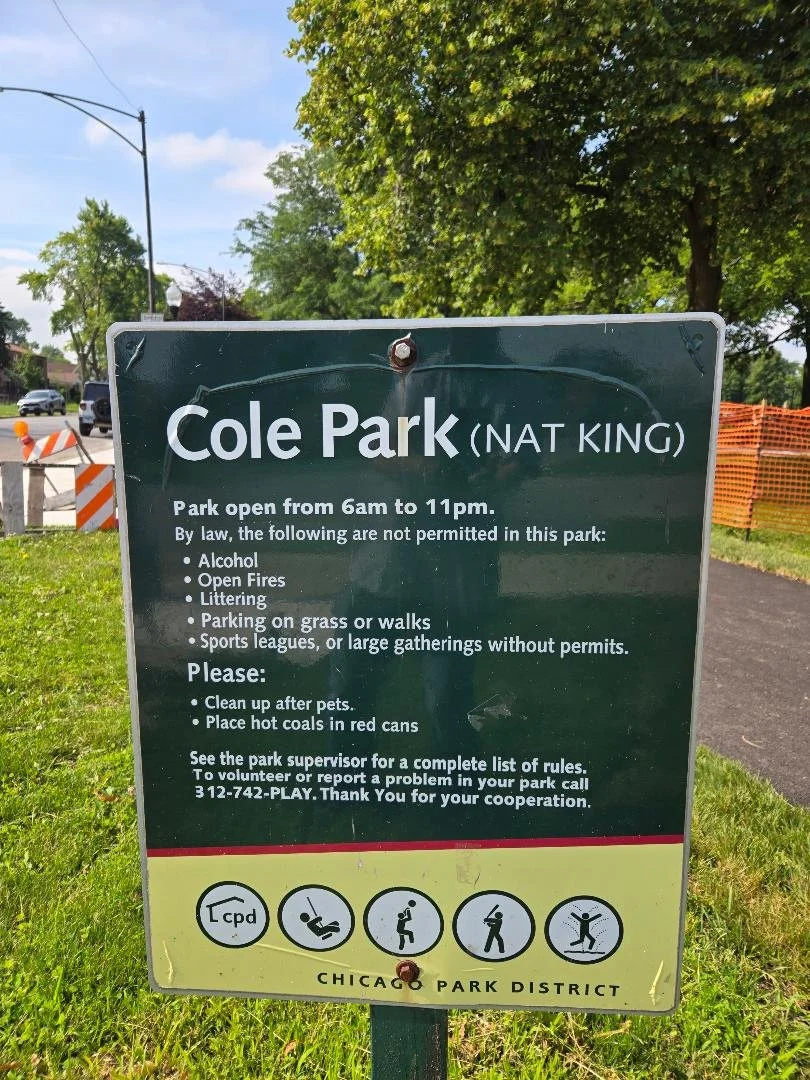
Before attendees learned about Armstrong’s genius, Smith discussed Nat “King” Cole (1919-1965), born Nathaniel Adams Coles, and other luminaries such as Sun Ra, Muddy Waters, and Tiny Parham, who gifted Bronzeville its brilliance. As the excursion exited the Forum, Lady Sunshine issued this invitation: “As we walk, I want you to listen, not just with your ears, but with your imagination. Listen for the music. Listen for the stories. Listen for the love.
“Let’s imagine busy streets, music spilling out of the windows, people dressed for the night, even on the weekday,” she continued. “Because, in Bronzeville, the night was just getting started.”
Such sounds, Smith stated, originated from Black people relocating to Chicago from the South. “It’s the sound of musicians falling in love with their craft and of teenagers falling in love on the dance floors of a community building something beautiful together.” These new arrivals began what historians would later call The Great Migration, which began in 1916. “They came north with hope in their pockets and rhythm in their bones,” she added.
(Since Black people were not allowed in downtown venues, such as the Medinah Club, Travis’ book noted, they found acceptance instead at the Forum and two other clubs on East 47th Street: the Boulevard Hall and the Warwick Hotel.)
When the Coles family migrated from Montgomery, Alabama, to Chicago in 1923, they lived at 4023 South Vincennes. There, Nat, a four-year-old baby lion, would play piano. He also played piano and organ for his father’s church, True Light Baptist Church, 4502 South Dearborn. Then, as a preteen, Nat performed concerts in his family’s living room.
“No spotlight. No sold-out crowds,” Smith explained. “Just a discipline and a love for the music…and maybe, just maybe, the hope that someone, somewhere, would hear him.”
While everyone then followed Smith to where 43rd Street and King Drive meet and dap up, Nash played “Smile.” First recorded by Cole in 1954, his liquid baritone encouraged everyone to: “Smile though your heart is aching/Smile even though it's breaking/When there are clouds in the sky, you'll get by/
If you smile through your fear and sorrow/
Smile and maybe tomorrow/
You'll see the sun come shining through for you.”
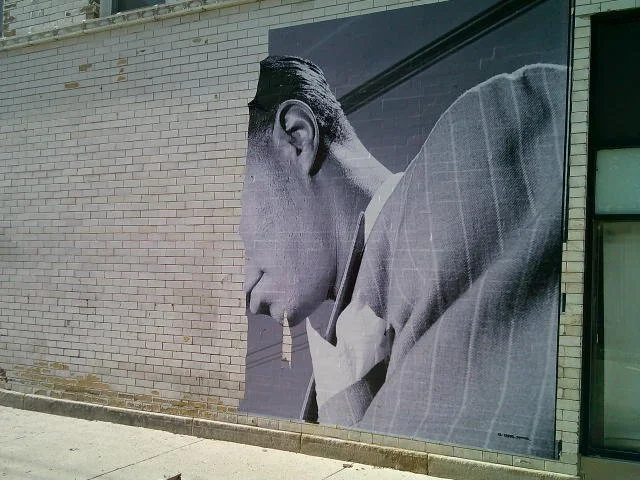
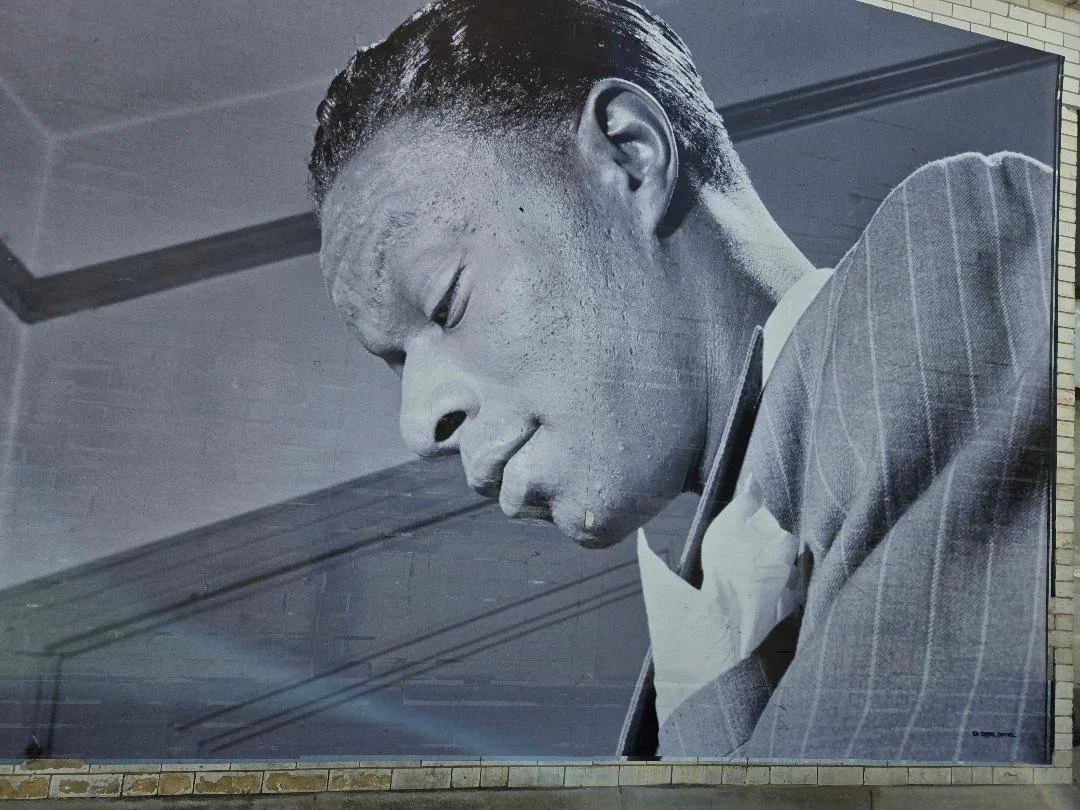
This intersection is also where a 12-foot-by-26-foot mural featuring Cole lives. Created by Chris Devins, a Chicago-based artist, this black-and-white homage debuted in 2014, as a gift from his Bronzeville Legends Initiative.
Blue Notes, Dark Fear, Espanol Energia
Cole’s gift to the world via Chicago, Smith noted, came through a double album, Live at the Blue Note Chicago. Supported by guitarist John Collins, bassist Charlie Harris, and drummer Lee Young, Cole would record such standards as “Unforgettable,” “You Stepped Out of a Dream,” and “Sweet Lorraine.”
“This is the clearest glimpse of his work ethic,” Smith said about the gigs, which happened at 56 West Madison. “In 1953, during a six-day run, he recorded 10 hours of music given in over 220 takes. His talent was built on relentless repetition.”
Cole also made history in 1956 as the first Black man to host a nationally-televised program. The Nat King Cole Show featured him doing his thing at the piano and singing with special guests that included Peggy Lee, Harry Belafonte, Ella Fitzgerald, and Mel Torme.
“But even with all that success,” Smith said, “(the show) couldn’t find a sponsor. Cole said, plainly, ‘Madison Avenue is afraid of the dark.’ ”
Cole’s popularity, Smith added, also came with some negative, life-threatening realities.
“The Ku Klux Klan burned a cross on his front lawn after he moved to Beverly Hills, California, in 1948,” she said. “And, in 1956, in Birmingham, Alabama, he was attacked on stage by a white supremacist during a performance. He was knocked off his piano stool, and there was also a kidnapping attempt.”
(According to the Equal Justice Initiative’s website, Cole, upon returning to the stage after this attack, received a 10-minute standing ovation: “ ‘I just came here to entertain you,’ he told the white crowd. ‘That was what I thought you wanted….Those folks hurt my back. I cannot continue, because I need to see a doctor.’ After being examined by a physician, Mr. Cole went on to perform at the show scheduled for a Black audience later that night.”)
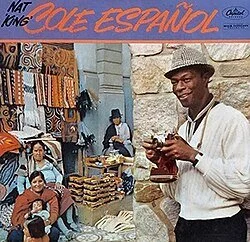
(As Cole’s popularity continued despite these challenges, his ability to sing in Spanish – as proven on the albums Espanol and More (1958), A Mis Amigos (1959), and Cole Espanoland More (1962) – increased his international profile.)
A Father/Daughter Delight
In 1991, 26 years after Cole died from lung cancer, his voice would be revived in a new, digitally-enhanced format. His daughter, Natalie, (1950-2016), would release Unforgettable…with Love. This multi-platinum, multi-Grammy-award winning album included her reinterpreting standards made famous by her father, such as “Nature Boy,” “Route 66,” and “Mona Lisa.”
Ms. Cole’s album closes with a duet with her father on “Unforgettable.” Cole’s production team combined Mr. Cole’s original vocal from 1951 with her mezzo-soprano. She recreated this moment at the 1992 Grammys, accompanied by a black-and-white video of Mr. Cole. The video also displayed photographs from Natalie’s childhood with dad. It concluded with both blowing air kisses to each other.
“I thank my dad for leaving me such a wonderful, wonderful heritage,” she said, when accepting the award for Record of the Year.
Lady Sunshine’s Brief, Bold Benediction
As the tour ended where it began, Smith reminded everyone that jazz, in all its shapes, sizes, and sounds, will always live.
“Jazz never really ends. It changes. It adapts. It evolves, just like love,” she said. “What we’ve been tracing today just isn’t history. It’s evolution. Jazz didn’t stay in one place. It grew here in Bronzeville and kept transforming.”
Reprise
On Friday, July 10, the new owner of the building where the Nat King Cole mural was posted had it removed. When explaining this action, Lisa Collins, the building's new owner, wrote the following on the Bronzeville Alliance Facebook page:
"...[T]hat building has been abandoned for over four years now. The outside of the bricks was badly deteriorating and posed a danger to the outside public. I did receive a permit for masonary [sic] work and once completed will update with a beautiful historical murals."