Chuck Webb’s Guru Tonic: Injecting the Electric into the Expected

Barefoot, and wearing a tan kung fu robe, the apprentice runs up a wooden beam, executes a full flip in midair, and lands inches in front of his elder, as their battle intensifies. Knowledge about how to throwdown martial-arts style had been digitally downloaded into the apprentice’s brain by the teacher, causing the former to declare, “I know kung fu.” And now, in a virtual training area called the sparring program, the apprentice would show what he knows.
Without a blink or wasted beat, the elder, wearing a dark blue robe, responds by planting his right foot into his apprentice’s stomach, catapulting him hard into another beam, breaking it in two.
While the apprentice, face flush on the floor, waits for any oxygen brave enough to return, the elder glances at his left hand and then down toward the human still hoping life is not ending.
“How did I beat you?” he asks.
“You’re too fast,” the apprentice replies, pulling himself off the floor as his breath tries to catch up.
“Do you believe that my being stronger, or faster, has anything to do with my muscles in this place?” the elder asks, walking towards his wounded student.
Still winded from the foot and three words he had, somehow, stated seconds before, the apprentice only shakes his head. Then, bending forward, hands behind his back, the elder addresses the apprentice:
“You think that’s air you’re breathing now?” Then, turning away, he commands: “Again!”
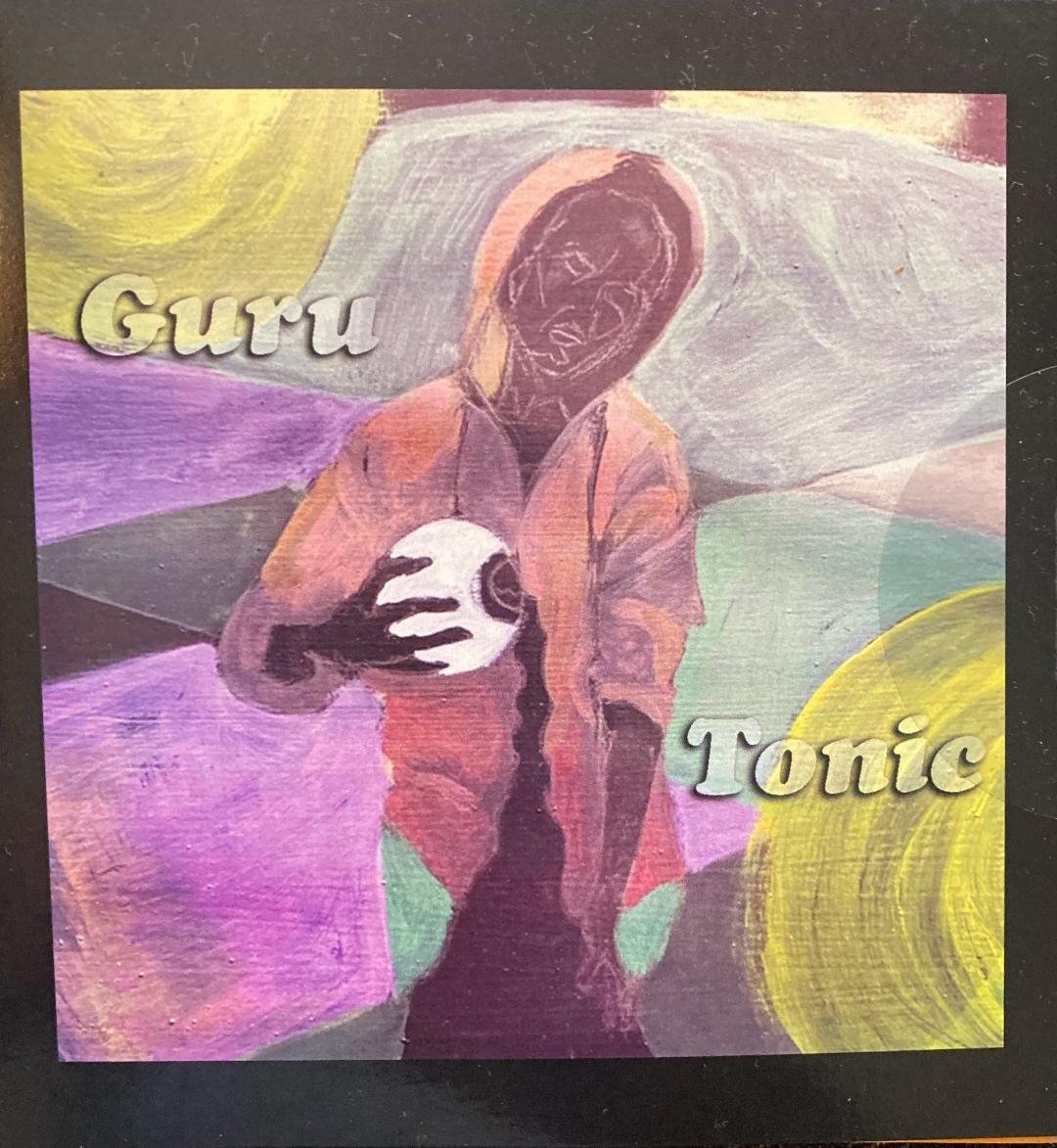


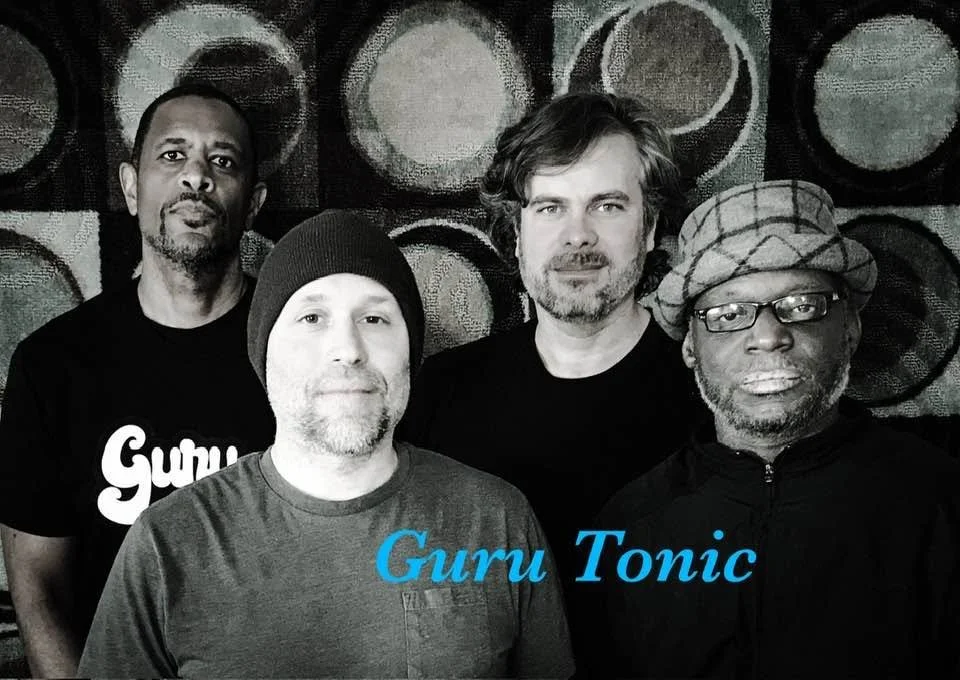
This scene is from The Matrix, a science fiction film featuring Keanu Reeves as Neo, the apprentice, and Laurence Fishburne, as Morpheus, the elder. This latter character’s intentions and actions moved bassist, composer, and educator Chuck Webb, who considers The Matrix to be beyond dope, to write “Morpheus,” a song that appears on Guru Tonic. This self-titled debut album comes from the four-piece jazz-fusion ensemble he has led since 2018. Joining Webb on this “live” recording from The Blue Nocturne in Chicago were keyboardist Tom Vaitsis, guitarist Tim Fitzgerald, and drummer Linard Stroud.
“Morpheus was the leader of a rebellion, but he knew, in his heart of hearts, that Neo was essentially the savior of mankind,” Webb said, during a recent conversation. “So he went through a bunch of psychological and spiritual challenges fighting to save humanity from computers and the machine.”
Described as an epic song containing multiple movements, “Morpheus,” Webb said, “has a really hard rock section, a funk section, and a more mellow section. It reflects what he went through in the trilogy of the movie.”
Webb, whose 50-year career includes performances with legends such as Ramsey Lewis, Mike Stern, Aretha Frankin, Charlie Daniels, and the Gerald Wilson Big Band, along with numerous theatrical productions and TV commercials, also served as Director of Bass Studies at Columbia College for 22 years before his recent retirement. He has also recorded two educational CDs for youths, Mind Games and Multiply This!, and his first book, Sight Reading for the Contemporary Bassist, will be published on November 1 and available through chuckwebbmusic.com.
Funkin’ Up the Fest!
Guru Tonic, with percussionist Tony Carpenter added for extra strength, played at the Von Freeman Pavilion during the most recent Chicago Jazz Festival. Webb, who played electric bass exclusively, called the performance “A Tribute to Soul Jazz of the ‘60s.”
“It was a mixture of some soul jazz songs that were popular – maybe not radio popular – but popular in the neighborhoods,” he explained. “These songs were recorded by jazz artists who had a sensibility for more soul, R&B, and funk.”
On Herbie Hancock’s “Cantaloupe Island” and Freddie Hubbard’s “Red Clay,” the set’s openers, Tim Fitzgerald’s vigorous solos propelled the ensemble into overdrive. These workouts led Webb to declare that Fitzgerald had (perhaps literally!) destroyed his guitar.
Tom Vaitsis, featured on Rhodes (mostly) and acoustic piano, (a li’ bit), brought his sensitivities to “Momo’s Groove,” a Webb original. This song first appeared on No Smoke, No Mirrors, Webb’s solo album from 2014, and is revisited on Guru Tonic.
“ ‘Momo’s Groove’ is for my mom,” he said, when discussing the song’s origins. “When my first son was born, he couldn’t say Mary (his grandmother’s name) or mommy. He ended up turning that into Momo, and that became her name from then on.” Composed in 40 minutes, “Momo’s Groove” received ample airplay from SIRIUS/XM’s jazz channel.
Other originals on Guru Tonic include “Brain Child,” which Webb described as an attempt to inject intellectual ideas into straight funk, and “Yellow.” This tune first formed in Webb’s imagination after he caught a gig by the Yellowjackets, a major presence on the jazz-fusion scene since 1977.
“I got the chance to talk to the bassist, (Dane Alderson), and I was really inspired,” Webb said. “I then decided to write a song in the vein of the Yellowjackets. But when ‘Yellow’ was finished, it sounded nothing like the Yellowjackets, but that was the intent.” Webb’s four originals on Guru Tonic were complemented by standards that included Cedar Walton’s “Bolivia,” Donny Hathaway’s “Valdez In the Country,” and Miles Davis/Victor Feldman’s “Seven Steps to Heaven.”
At the Pavilion, after Guru Tonic ate up Gene Ammons’ “Red Top,” Webb redirected the emotions by exploring the tenderness present in Sam Rivers’ “Beatrice” by putting his bass on top as the lead voice. When introducing this ballad, Webb stated that his interpretation would be dedicated to the late bassist Andrew King, his student at Columbia, who died in August at age 25.
Webb recalled how “the redheaded kid from the suburbs (of Barrington)” made such a deep impression.
“I eventually sent him as a sub on gigs I couldn’t make,” he said.
When this tribute concluded, Guru Tonic then refreshed its Go for the Juggla mojo by devouring “Seven Steps…” “Do that Latin thing!” Webb instructed Tony Carpenter – also known as ToCa! – who introduced the tune by displaying his expertise on all the artifacts in his arsenal, complemented by Linard Stroud at the trap set. The program concluded with “Take a Second Look,” a bright, brisk original by Fitzgerald. (Hours later, footage from this performance, showing Webb groovin’ on his axe, would be shown on WLS-TV’s early evening newscast.)
Guru Tonic’s presentation, Webb said during our conversation, showed what the members could do and what they decided to do.
“We are versatile enough to do a lot of things. We could (have done) a straight ahead, acoustic set and really played it for real,” said Webb, who had performed a few weeks prior with the Chicago Symphony Orchestra in its tribute to Quincy Jones, held at Ravinia. “But I decided not to do that. I wanted our set to be unique.”
Guru Tonic: What the Name Really Means
While checking out some literature about the word guru, Webb learned all its positive and negative connotations. Still, guru stayed stuck in his consciousness as a new name for a band, which had previously bore his name. But it needed something else to become official.
Eventually, he added the word tonic and let it fly.
“If guru is negative, you then have a tonic for that negative,” he explained. “If guru is positive, you then take a tonic and have more of it.”
Tonic, Webb continued, could also be an elixir one drinks to gain strength. And musically, tonic is the note around which the melody revolves.
“People ask me all the time: ‘What does Guru Tonic mean?’ And I say, ‘What does it mean to you?’ he said. “I will leave it up to the listeners to decide whatever associations they want to put on top of it.”